A community-driven project delivering care closer to home while opening doors to careers in construction
A new healthcare construction project is taking shape in Rolla, Missouri, improving access to care for veterans across the region.
For Catamount Lead Superintendent Patrick Meyer, the work carries an added level of accountability. He grew up in the area, and that connection brings a deeper responsibility to deliver it the right way for the people who live there.
“While having grown up in the project area does not significantly alter my day-to-day approach, it does introduce an added sense of accountability. Many of the contractors have team members who are personally familiar with my family or me, reinforcing my commitment to ensuring a successful outcome.”
That sense of responsibility shows in the team’s ownership of the work. They stay connected, follow through, and take pride in how the project comes together.
A Project Rooted in Relationships
The impact of this project extends beyond the jobsite into the community. The facility will improve access to care for veterans across Rolla and surrounding rural communities, bringing services closer to where they are needed and strengthening the region as a whole.
“This clinic builds on the VA’s commitment to bringing services into the region,” said Owner’s Representative for the Developer, Cory Zonich, with Molasky Development. “It supports veterans by reducing travel time and creating both permanent and construction jobs in the region.”
That same commitment to people shows up in how the team engages with the community throughout construction.
“It is so important that we give back to the communities we build in,” said Brandon Moore, Vice President with Catamount. “While Rolla is not home to a Catamount business unit, our people are driven to make an impact, not just on the job, but outside of it. We want to make a difference.”
Opening the Door to the Next Generation
Throughout construction, the team created opportunities to share the project with students from Rolla Technical Institute (RTI). These opportunities gave them firsthand experience on a large-scale commercial jobsite.
“It is always fulfilling to show the next generation what we do and how we do it,” said Zonich. “Hopefully, it sparks interest in the many paths available across construction, architecture, and engineering.”
For many students, it was their first exposure to this type of work, and it made an immediate impression.
Alison Watson, Assistant Superintendent and Vice Chair of Catamount Women in Construction, joined the visit. Her presence provided visibility and a visible female presence, and she answered questions about her role in the field.
“I was invited to be on site so students, especially young women, could see what a role like mine looks like in the field,” said Watson. “It was great to share that perspective while also learning more about a different type of project than I typically work on.”
“The professionalism across all trades was highly evident,” said RTI Instructor Charles Cassidy. “The jobsite was remarkably neat, organized, and safe. The students valued the opportunity to observe skilled tradespeople performing high-quality work in real time.”
That level of care and organization reflects the pride the team brings to the work every day.
“Exposure to a commercial site of this scale is eye-opening,” Cassidy said. “It introduced the students to a wide range of career opportunities and specialized roles they had not previously considered. Providing students with an on-site experience offers a sense of possibility that classroom instruction alone cannot replicate.”
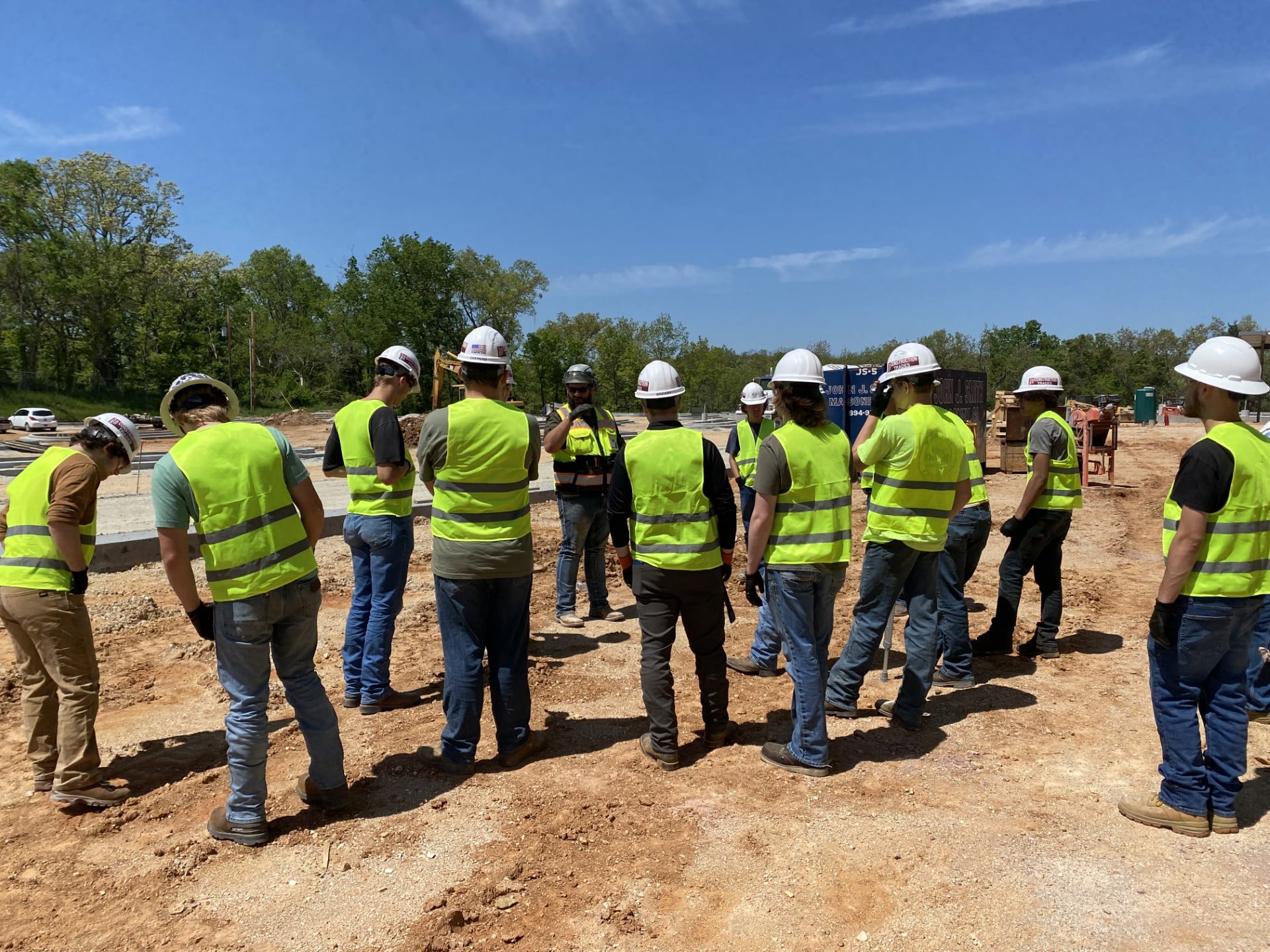
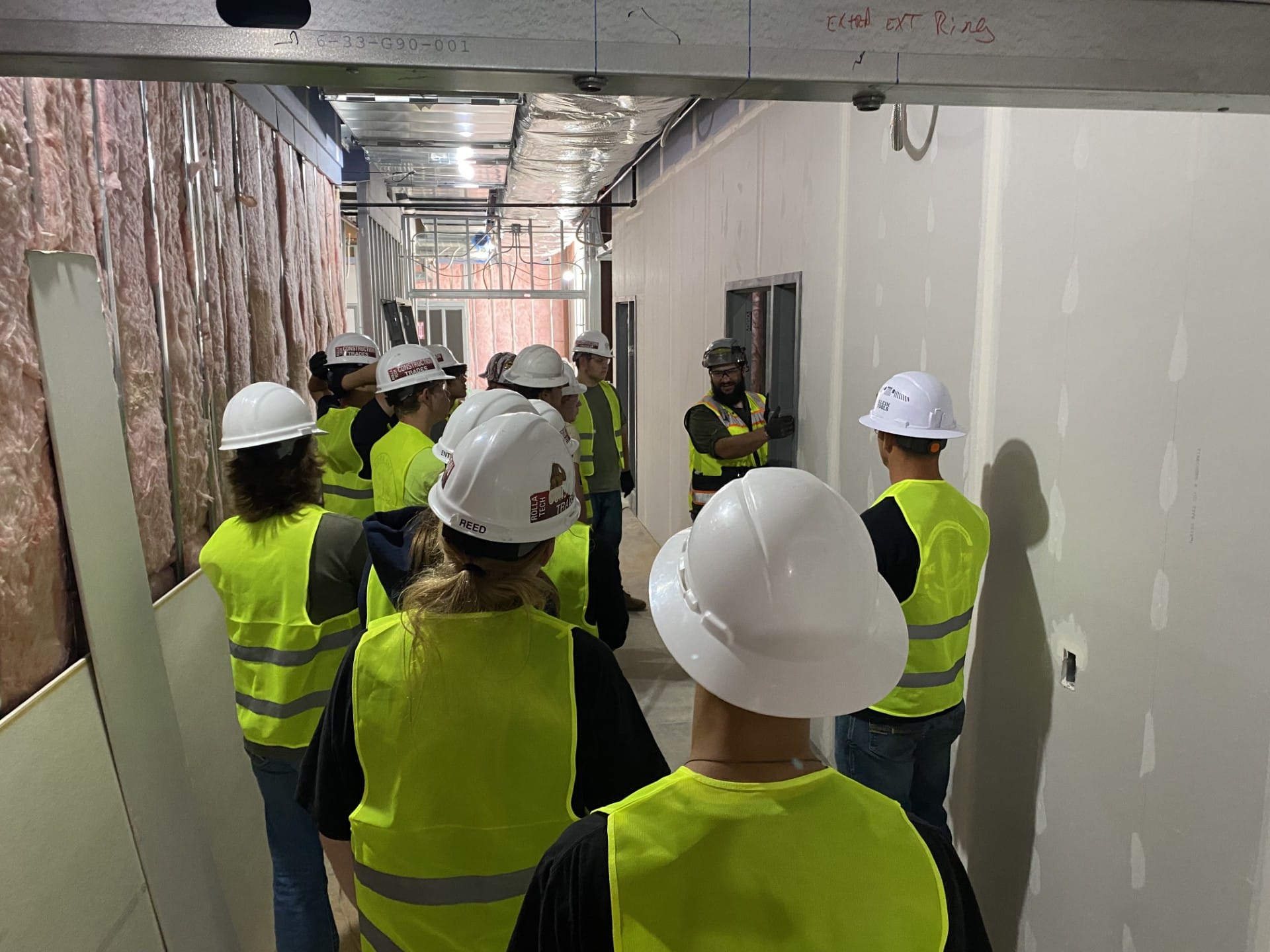
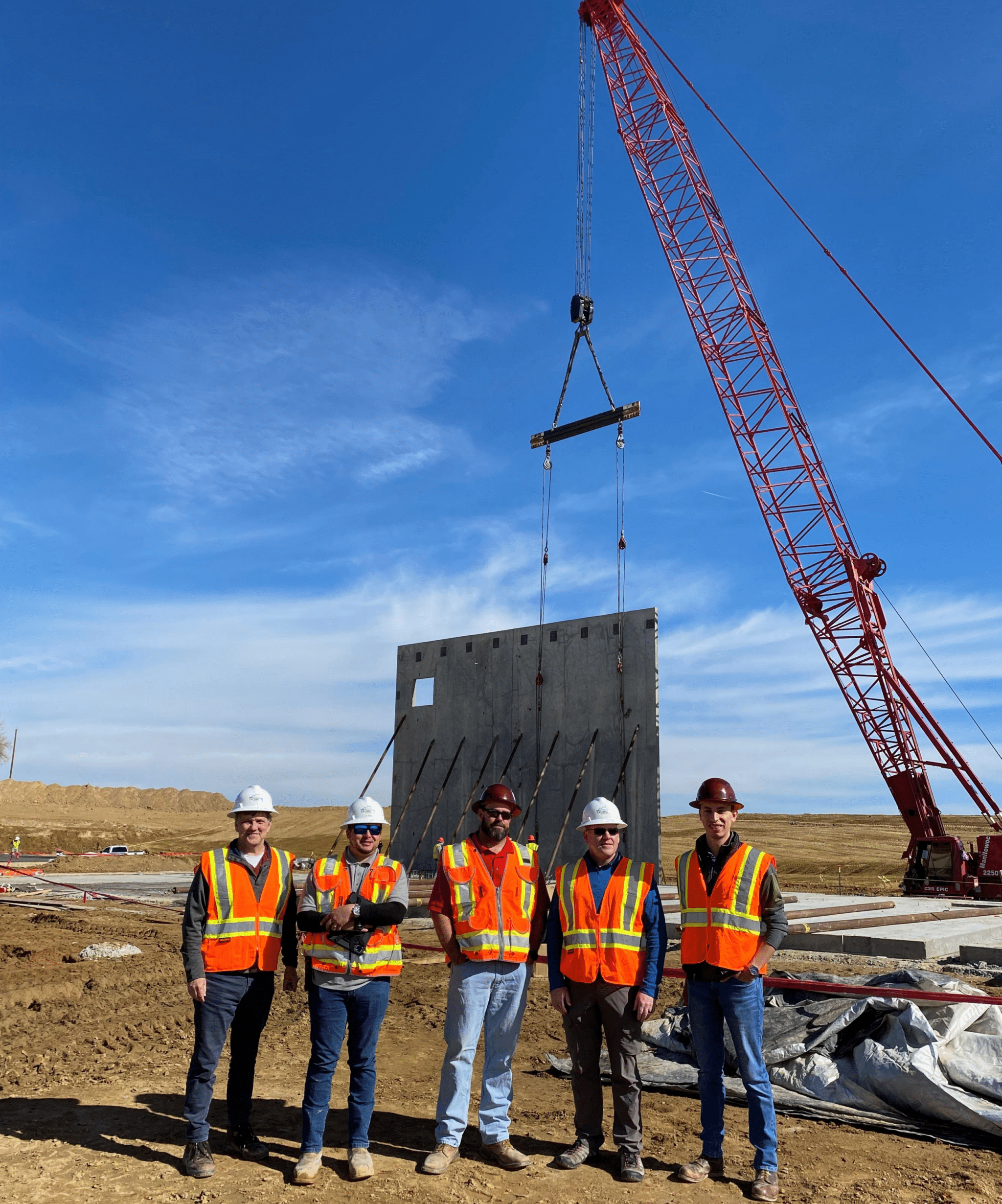
Patrick Meyer leads students from Rolla Technical Institute (RTI) through the jobsite, connecting classroom learning to real-world construction experience.
For Meyer, that connection comes full circle. “RTI closely mirrors the type of program that introduced me to the trades,” he said. “Providing students with exposure to commercial construction was a particularly meaningful and rewarding opportunity.”
A Team That Owns the Work
Students experienced a jobsite that felt safe, organized, and professional, with clear walkways, active field coordination, and crews working with intention and awareness of their surroundings.
The team’s mindset is consistent: take ownership, drive the work forward, and support one another. That’s especially clear in their approach to safety.
“The team is doing an outstanding job owning safety on this project,” said Catamount Safety Manager Stuart Wilson. “I’m there to support them and stay engaged, but they’re the ones putting in the work every day, looking out for each other, and upholding a high standard.”
That ownership mindset extends to how the project is managed overall.
“This team has fostered open lines of communication and resolves issues in the field as soon as they’re identified,” Zonich said. “They have been diligent in ensuring that information is clear, concise, and followed through to closure.”
It’s a disciplined approach, backed by a team that pushes for results, holds itself accountable, and creates a jobsite that gives students a clear picture of what best-in-class construction practices look and feel like in the field.
Delivering Something that Matters
The impact of this work is already taking shape across the community.
“For veterans in Rolla and surrounding rural communities, accessing necessary healthcare has historically required traveling long distances to multiple facilities,” Meyer said. “Being part of a project that consolidates care providers into a single, modern facility is both meaningful and impactful, and it has made this one of the most rewarding projects I have been involved in.”
At the same time, the project is opening doors for the next generation. Access to the site gave students a firsthand look at a type of healthcare construction they may never have encountered. The team takes pride in this work, building something that improves access to care today and helps shape the industry’s future.
Connect with Catamount Constructors on social media: LinkedIn, Facebook, and Instagram.